Quantifying Fomite Hotspots and Targeted Hygiene Impacts in a Hotel Lobby
Environmental surfaces in public spaces can harbor viruses that spread through touch, but cleaning protocols are often not evidence-based. This study evaluated how effectively a targeted, surface-specific disinfection strategy could reduce viral contamination and infection risk in a real-world hotel lobby setting.
Quantifying Fomite Hotspots and Targeted Hygiene Impacts in a Hotel Lobby
Environmental surfaces in public spaces can harbor viruses that spread through touch, but cleaning protocols are often not evidence-based. This study evaluated how effectively a targeted, surface-specific disinfection strategy could reduce viral contamination and infection risk in a real-world hotel lobby setting.
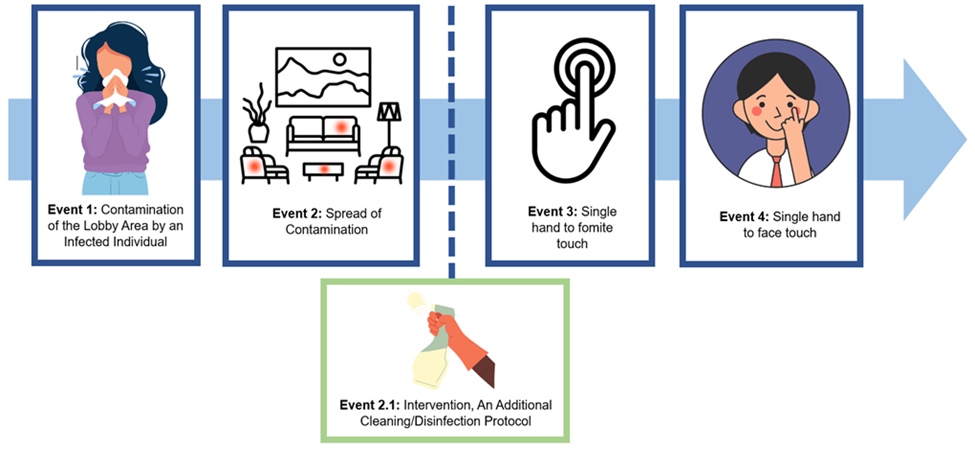
Environmental surfaces in public settings can serve as reservoirs for microbial pathogens such as norovirus, rhinovirus, and adenovirus, spreading through hand-to-surface contact. This study examined viral spread and infection risk in a hotel lobby using a viral tracer (bacteriophage Phi X174), human behavior observations, and Quantitative Microbial Risk Assessment (QMRA).
Contamination seeded on high-touch surfaces spread to 50% of sampled surfaces within four hours. A Targeted Hygiene intervention tailored to surface types (disinfecting wipes, sprays, aerosols) reduced viral concentrations by 97.36% (1.57 log₁₀ reduction) and decreased cross-contamination.
QMRA modeling showed that infection risks from surface contact were highest for rhinovirus, rotavirus, and adenovirus, but were reduced by over 97% following intervention, meeting U.S. EPA and WHO health risk benchmarks.
This study is the first to integrate real-world human behavior, viral tracer experiments, and QMRA modeling in a hospitality setting, supporting evidence-based hygiene strategies that focus cleaning efforts where and when risk is greatest.

Removal, Kill, and Transfer of Bacteria from Hands by Antibacterial or Nonantibacterial Soaps After Handling Raw Poultry
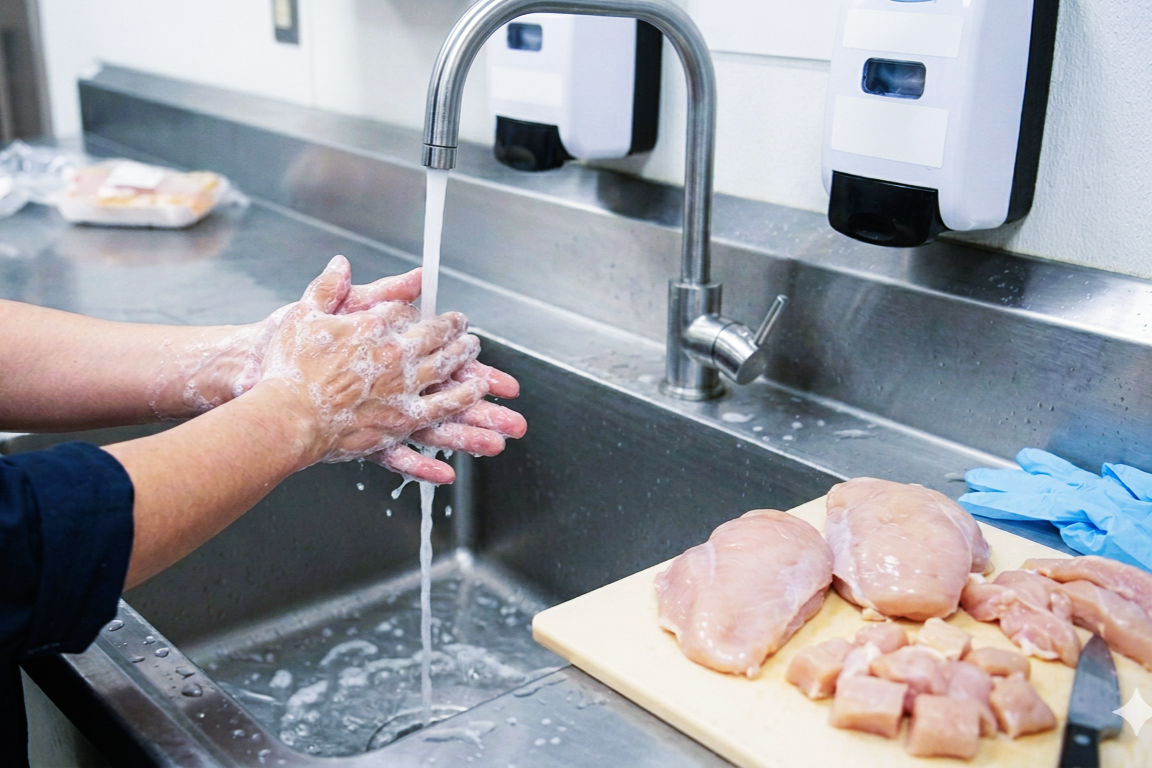
This study evaluated how well antibacterial and non-antibacterial soaps remove and reduce bacteria on hands after handling raw poultry. Antibacterial soaps removed more E. coli from hands and reduced bacterial contamination in rinse water compared with plain soap or water alone.
Removal, Kill, and Transfer of Bacteria from Hands by Antibacterial or Nonantibacterial Soaps After Handling Raw Poultry
This study evaluated how well antibacterial and non-antibacterial soaps remove and reduce bacteria on hands after handling raw poultry. Antibacterial soaps removed more E. coli from hands and reduced bacterial contamination in rinse water compared with plain soap or water alone.
Handling raw poultry can leave large numbers of bacteria on hands, creating opportunities for contamination of food, surfaces, and kitchen tools. In this study, researchers simulated a real-world food preparation scenario by having participants handle raw chicken contaminated with Escherichia coli, then wash their hands using only water, non-antibacterial soap, or several types of antibacterial soaps. The team then measured how many bacteria remained on hands, how many were present in rinse water, and how many transferred to a food-preparation tool after washing.
Results showed that washing with plain soap and water removed large amounts of bacteria from hands, but antibacterial soaps produced even greater reductions. Antibacterial formulations achieved roughly a 4-log reduction in bacteria on hands compared with about a 3.6-log reduction for plain soap or water alone. Researchers also found that rinse water from antibacterial soaps contained fewer surviving bacteria, suggesting these products both remove and inactivate microbes during washing.
The study also examined whether bacteria remaining on hands could transfer to a food-preparation surface after washing. While fewer bacteria tended to transfer following antibacterial soap use, the differences were highly variable and not statistically significant in this experiment. Overall, the findings reinforce the importance of proper handwashing during food preparation and highlight how different soap formulations may influence how bacteria are removed, killed, or potentially spread in kitchen environments.

Hospital Field Study of T1 Air Disinfector Recirculator Efficacy Against Viral Tracers
Research has shown that microbial pathogens are commonly transmitted through the aerosol route to surfaces, equipment, and hands in the clinical setting. This project aimed to quantitate the efficacy of the Aerobiotix T1 Air Disinfector Recirculator against viruses in real-time hospital settings.
Hospital Field Study of T1 Air Disinfector Recirculator Efficacy Against Viral Tracers
Research has shown that microbial pathogens are commonly transmitted through the aerosol route to surfaces, equipment, and hands in the clinical setting. This project aimed to quantitate the efficacy of the Aerobiotix T1 Air Disinfector Recirculator against viruses in real-time hospital settings.
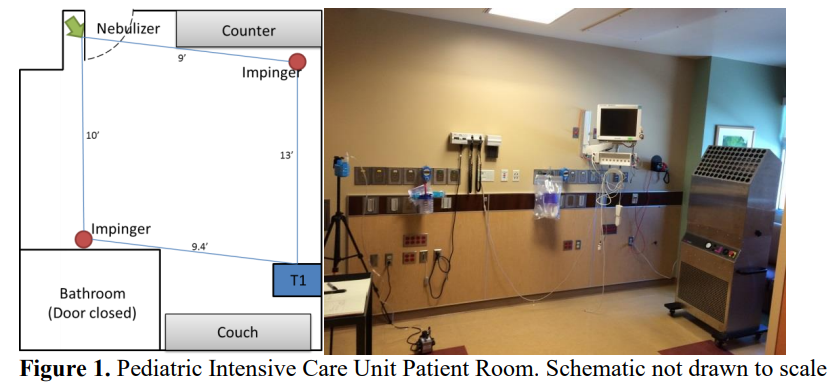
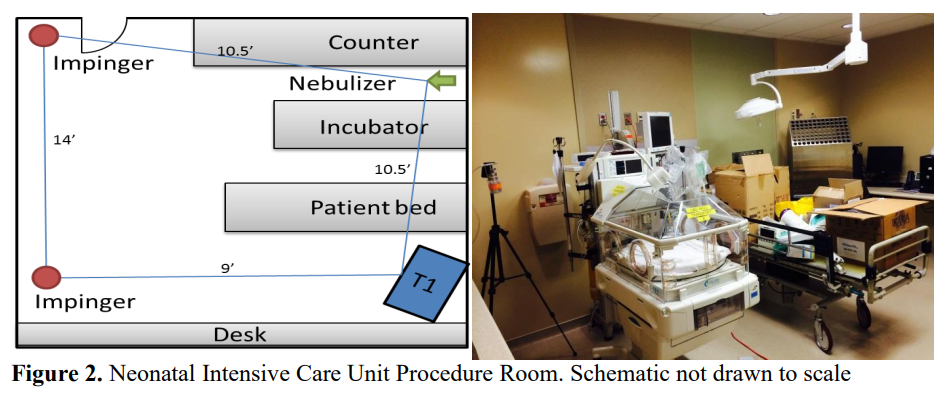
Two hospital rooms were used during this study: a pediatric intensive care unit (PICU) patient
room and a neonatal intensive care unit (NICU) procedure room. The air in each room was
seeded with coliphage ΦX-174. Air samples were collected to assess the efficacy of the hospital
HVAC system and the Aerobiotix T1 unit. Samples were processed at The University of
Arizona's Environmental, Exposure Science and Risk Assessment Center (ESRAC) laboratory
following USEPA method 1601.
In total, 212 samples were collected during this project: 144 from the PICU patient room and 68
from the NICU procedure room. In the PICU patient room, the average reduction of seeded
coliphage concentrations under the natural HVAC conditions (2.46 log) was not significantly
different (p=0.225) from the Aerobiotix T1 removal rates (2.92 logs). In the NICU procedure
room, the average reduction of seeded coliphage concentrations under the natural HVAC
conditions (1.76 log) was not significantly different (p=0.980) from the Aerobiotix T1 removal
rates (1.77 logs).
The Aerobiotix T1 unit provided improved airborne viral concentration reduction by about 0.5
logs compared to hospital HVAC in the PICU patient room. In the NICU procedure room, no
measureable differences were detected between the Aerobiotix T1 and the natural HVAC
system; likely a factor of the extreme air exchange rate (37.5 exchanges hour-1
). Future research should focus on additional investigations in the PICU patient room that incorporates fomite and
air testing. Including fomite testing may highlight the Aerobiotix T1 capabilities to reduce the
amount of aerosolized microbes that rapidly settle on surfaces.
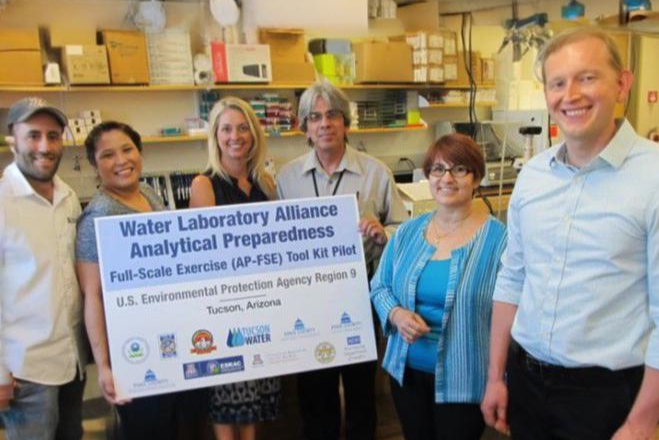
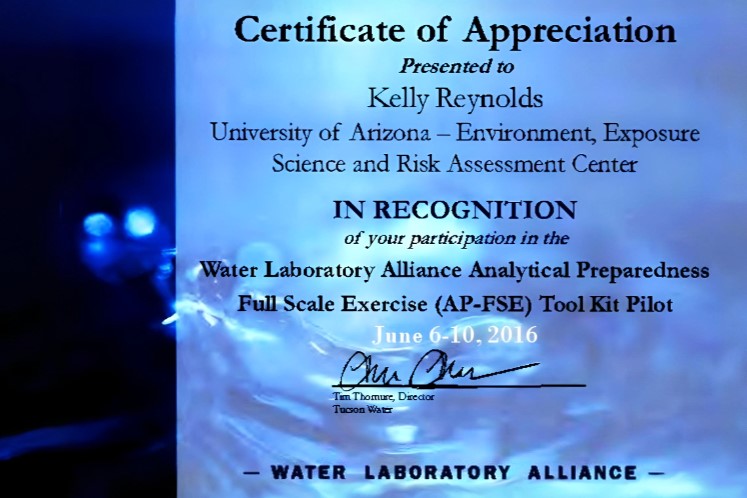
Water Laboratory Alliance Analytical Preparedness Full-Scale Exercise
From June 6-10, 2016, the team at ESRAC helped pilot test new laboratory procedures during a simulated emergency water contamination scenario.
Water Laboratory Alliance Analytical Preparedness Full-Scale Exercise
From June 6-10, 2016, the team at ESRAC helped pilot test new laboratory procedures during a simulated emergency water contamination scenario.
Tucson Water, in coordination with the U.S. Environmental Protection Agency (USEPA), conducted the Water Laboratory Alliance Analytical Preparedness Full-Scale Exercise that spanned multiple locations and time zones. In addition to ESRAC, four other laboratories were involved in the exercise, each responding to a unique set of testing and protocol challenges or injects. More than 25 representatives from Tucson Water, USEPA, Pima County Office of Emergency Management, Pima County Health Department, Pima County Wastewater Reclamation Department, the Tucson Office of Emergency Management and Homeland Security, and the University of Arizona participated as players, observers, evaluators and responders in the exercise.
- ESRAC: Jonathan Sexton Kimberley Munoz Kelly Reynolds
- Tucson Water: Daniel Quintanar
- CSRA: Yildiz Chambers
- USEPA: George Gardnier